
What Actually Drives the Cost of Door Hardware Restoration
One of the most common questions we hear is some version of: “How much will it cost to restore this?” It’s a fair question, and an understandable one. But it’s also one that doesn’t have a single answer, because restoration costs depend on several factors that vary from piece to piece, and sometimes from door to door in the same house.
Rather than guess at a number that won’t actually apply to your situation, it helps to understand what goes into that number in the first place.
The Material Matters More Than You’d Think
Not all door hardware is created equal, and neither is the process to restore it. Solid brass, bronze, iron, and steel each respond differently to cleaning, stripping, and refinishing.
- Solid metal pieces generally restore well and can often be brought back to near-original condition
- Plated hardware (a thin layer of finish over a base metal) requires more care, since aggressive cleaning can wear through the plating
- Hardware with decorative detailing or engraving takes more time, since every groove and pattern needs to be worked carefully rather than stripped in bulk
The Extent of Damage or Buildup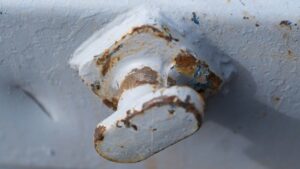
A piece with light tarnish and a little dust is a very different project than one buried under layers of paint or decades of corrosion. The more buildup there is, the more time it takes to safely remove it without damaging what’s underneath. This is one of the biggest factors in any restoration estimate, and it’s often impossible to know for certain until the piece is examined in person or up close in photos.
Mortise Hardware vs. Surface-Mount Hardware
Mortise locks and hardware installed into a pocket within the door are typically more complex to restore than surface-mount pieces. These mechanisms often have more moving parts, and depending on age, may require sourcing specific components or fabricating a replacement part to get everything working smoothly again.
How Many Pieces Are Involved
Restoring a single doorknob is a different scope than restoring the hardware for an entire home’s worth of doors. Projects with multiple matching pieces, especially when consistency across all of them matters, take more coordination to make sure every piece comes out looking and functioning the same way.
Whether a Replacement Part Needs to Be Custom Made

Sometimes a piece is in such good shape that restoration is straightforward. Other times, a component is missing, broken beyond repair, or simply doesn’t exist anymore because the manufacturer stopped making it decades ago. In those cases, custom fabrication becomes part of the process, which adds time and cost, but is often still more affordable than trying to replace an entire set with something that won’t quite match.
Why Restoration Is Still Usually the More Cost-Effective Choice
Even accounting for all of these factors, restoration is frequently less expensive than full replacement, particularly when you factor in:
- The cost of sourcing new hardware that matches your door’s existing holes and backset
- Labor for patching, filling, and refinishing a door to accept new hardware
- The simple fact that quality, period-appropriate hardware isn’t cheap to buy new, if you can find it at all
Get a Clear Picture Before You Decide
The best way to understand what a specific restoration project will cost is to let us take a look. Send us photos of your hardware, along with any details about its condition, and we’ll help you understand what’s involved and what your options are.
You might find that restoring what you already have costs less, and delivers a better result, than you expected.